Sunday, January 28, 2007

Down on the beach

Newtonhill smelt of cow-crap this morning. Actually, it still smells like that as I'm writing this (evening). I went to find the source of this scatalogical horror, which turned out to be a fertilised stubble field up by the A90. Birds in said field were 7 Carrion Crows, 1 Rook, 2 Magpies and a Skylark. Not very exciting, but slightly better was a pack of birds around the feeders in one of the gardens by the track, which included at least 3 Yellowhammers. Btw will someone tell my why we stopped calling them Yellow Buntings?

Emberiza citrinella, the real Yellow Bunting


Emberiza sulphurata - the vaguely Yellow Bunting

High tide when I got down to the beach this morning, so I settled down to count the shifting hordes of roosting waders. Here they are, look.

A wee secret, some more were hiding on the other side of the rock. So 2 Purple Sandpipers, 15 Ruddy Turnstones and 2 Common Redshanks. Sorry it's crap, but it was so murky I had to go up to ISO800.

Offshore, I was looking for some faux-borealis Common Eiders. Nothing with decent scapulars today, but cop a load of the bill colour on this one.

Sorry, bit of an eider overload there. Also offshore, a rather spankingly white Red-throated Diver fishing in the bay (and another one going north), a really meaningful Shag, afew Common Guillemots and Razorbills back and forth, the usual assortment of gulls, but not many of them, and some Northern Fulmars inspecting the cliffs.

A family of hybrid Hoodie x Carrion Crows were feeding on the clifftop grass - happy slapping hoodies with ASBOs - and a couple of Rock Pipits.

In Cage and Aviary Birds this week... how not to kill your Cockateils by scaring them in the night. (Strobelights and fireworks are right out!). A few 'Pekin Robins' (Red-billed Leiothrix) going cheap and blimey - pairs of Marbled Ducks at £30 a time! Cripes, at that price I think I might get a couple. I'll release them on Rutland Water when I go down for the Bird Fair. Future-read all about it: '2007 was the hottest summer on record in Mediterranean North Africa, a possible consequence of global warming, and widespread dessication and desertion of the Tunisian breeding lakes was reported in late July. That these wary and unringed birds should turn up at the right time does suggest that at least some of these wild birds may have headed north...'
You might be wondering whether there was a point to that, and you'd be right.
.
.
.

But I guess it is possible to make arguments for the wild origin of the most obvious escapes. Conversely, it's possible to come up with convoluted escapee arguments for the most obvious vagrants. I was going to mention some examples, but it's too inflammatory!

Since I mentioned the delights of my ex-home village of Winchburgh, I noticed I'm getting a lot of hits from people doing Google searches for that very village. So I'll set the record straight right away and say it was a very welcoming place in no way deserving of being slagged off by my exaggerations about the level of air-rifle crime and other nefariousness. It is however a matter of public record that certain of our neighbours were known to get drunk and head out on spontaneous Orange Marches round the town, complete with their instruments, in the wee small hours on more than one occasion. I'm sure it doesn't happen any more :-$


Sunday, January 21, 2007

It's fun to have fun, but you have to know how

More things Martin does not recommend.

Holding up the cup and the milk and the cake and these books, and the fish and the rake. The toy ship, a little toy man, and with my tail I can hold a red fan. Fanning with the fan as I hop on the ball. But that is not all. Oh no, that is not all....

It was bound to end in disaster - I read it in a book. Please send cards and flowers to Aberdeen Royal Infirmary, Fell on your Head Unit.

While I'm on the subject, other things Martin doesn't recommend almost certainly include:
Green Eggs and Ham
Tweetle Beetles.

But to business. I was FINALLY up to a bit of light birding. The emergency medical quarantine squad have stood down... bits of my spleen have signed contracts with the Ministry of Defence, probably, and Birdspotting lay before me today like the odour of myrrh, like sitting under a sail in a good wind, like the home that a man longs to see after years spent as a captive. But I could have picked a better day for it. Chilly. Plan A was to find a big congregation of gulls. Disaster! Couldn't find any. Options now limiting, cos there weren't any other birds around either. A Common Redshank on the beach, and a small flock of Common Eiders offshore. OK then let's sort out this borealis Eider nonsense. I've never got my head round borealis Eiders, but suddenly it seems like everyone is seeing them. Or at least they're on BirdGuides every flipping day. I can do that too. In fact today I had 5 Common Eiders with bright orange/yellow tones in their bills, two with obvious 'sails' (I assumed these were long scaps though BWP says they're tertials) courting a reddish female. How easy is that? :-) I'm certain they're ALL local breeders and not borealis at all. Maybe if someone could show me a real borealis I might see the error of my ways.

Proper birding soon. Meanwhile remember... when beetles battle beetles in a puddle paddle battle and the beetle battle puddle is a puddle in a bottle... they call this a tweetle beetle bottle puddle paddle battle muddle.

Tuesday, January 16, 2007

My tweet mag

For sale in this week's Cage and Aviary Birds...

Face it, it's mostly budgies, canaries and African Grey Parrots, but other interesting stuff includes

European Eagle Owls
Snowy Owls
Red-footed Falcon
Golden Eagles
Redpolls - all flavours
Bufflehead (£300 a pair)
Hooded Mergansers (£125 pr)
Meadow and Rock Pipits
'Siberian' Bullfinches

The price of Hooded Mergs and Buffleheads compares to about £500 for a pair of African Greys :-O

Things Martin does not recommend

No 2)
Wheelchair races down a flight of stairs.

Please send cards and flowers to Aberdeen Royal Infirmary, Testicular Bruises Unit.

No. 1 in a potentially long-running series

Things Martin does not recommend:
1) Debriding the infection with a hot kitchen knife.

Please send flowers and cards to Aberdeen Royal Infirmary, Idiotic Burns Unit.

Sunday, January 14, 2007

Bring out your dead

Eugh. I'm sick. The doctor says he hasn't seen anything like it outside 18th century French medical textbooks. I didn't know it was possible to catch dropsy off a friendly goldfish. And boils! Anyway, I'm away to debride the infection with a red hot kitchen knife, so here's some pictures. Normal service will be resumed etc etc.


Things that aren't looking forward to global warming. No. 1 Rock Ptarmigans


Things that aren't looking forward to global warming. No. 2 Arctic Hares. Especially that one.


Thursday, January 11, 2007

Hero of the Revolution addendum

Thanks to Lee Sterrenburg from Bloomington Indiana, who posted this OED entry on BIRDWG01. In Harry Witherby's 'Hero' entry I overlooked (in fact it's been widely overlooked) that his Practical Handbook (1920) contains the first recognised use of the term 'vagrant' in ornithology. can that be true? I'll be checking older books tonight.

ADDITIONS SERIES 1997

vagrant, n. and a.

Add: [A.] 4. Ornith. A bird that is encountered outside its normal area of distribution or migration; spec. (in the U.K.), one that has been recorded fewer than twenty times in the British Isles.

1920 H. F. WITHERBY et al. Pract. Handbk. Brit. Birds I. 140 The Lapland Bunting... has occurred [in] many English counties as vagrant. 1953 D. A. BANNERMAN Birds Brit. Isles I. 337 The snow finch has occurred as a vagrant in several other countries of eastern Europe. 1983 Birds Spring 15/2 The vagrant from the Continent, was found sheltering under a car. Many birds are blown off course during gales. 1988 Bird Watching Aug. 46/2 Returning migrants are beginning to appear and by the end of the month we could witness good seabird movements and the first North American vagrant.

Tuesday, January 09, 2007

Lest we forget, again again

I found this photo getting all scratched and fading, so thought best to get it scanned before it goes away forever. 13th March 1989, Baltimore Oriole at Roch, a long way down in Wales. I remember we's spent all day on Saturday (12th) showing an American birder (argh!, forgotten his name) round Norfolk etc. to tick off Willow Tits and other burdies. Then as Satan's way of saying thank you for being so good, we were rewarded with a Baltimore Oriole (it was on a taxonomic holiday as Northern Oriole in those days) at Roch. So it was back in the car and AWAY!

Baltimore Oriole (photo by Pete Wheeler)

Mind, it didn't show straight away. There was an hour wait, which wasn't pleasant.

I immortalised it with an inaccurate sketch that I coloured in on the way home.

I wish I could remember that American birder's name, cos although he didn't come all the way across for the Oriole, he did twitch Golden-winged Warbler a month earlier, on account of them not being particularly easy to see back home. Would there have been a revolution if that bird had gone in Category D?
.
.
.
.
.
.
.
.
.
.
... where it belongs!!!!! :-O :-) :-)))) joke

Sunday, January 07, 2007

I thought it might be a bit of a hoot to make an early start and go down to Ferryden to see this Bonaparte's Gull. Must be 15 years since I've seen one. Unfortunately, when it came to this morning, I couldn't be bothered. Something to do with my unhealthy obsession with Princess Leia, and playing PS2 Star Wars Lego II until the wee hours. So I ended up walking round Newtonhill instead, where the only thing of any remote interest was a White-throated Dipper singing lustily on the Elsick Burn. He must be keen to get started. Whipped out RememBird.... unfortunately, it's another one that suffers from background noise, in this case on account of the bird being shy, and stood on a rock in the middle of a babbling brook next to the A90. But turn your bass down and everything else up, and it might be tolerable. Everything louder than everything else.

White-throated Dipper, Newtonhill

And I finally went back to ASDA to pick up the prints of those Grey Partridges that turned up in the garden across the road last September during the muckspreading (ancient Kincardinshire fertility ritual). They were well worth waiting 4 months for. NOT! :-) I'd have posted them here just now, but unfortunately the rest of the film is happy smiling faces of my kiddies playing in puddles, so Diane's Mum has snaffled them for the mo. Will post when we get them back.

Saturday, January 06, 2007

Phew!

I'm glad that's over, got my 2006 records into Excel ready to go to Andy (County Recorder). I decided that rather than do any descriptions... I'd just give the address of relevant blog entries to back up (or not) anything I might have seen. It's more fun that way.

Random Horned Lark


Sorry so sorry - I forgot who I stole this photo off, so if it's yours... please leave a comment with permission to use it. :-) The Newmachar Common Buff-finch. Great photo, whoever you are. And thanks!

Friday, January 05, 2007

Winchburgh

Y'know, sometimes I miss Winchburgh, where we used to live in West Lothian. It had character. And characters. Rarely would you go out birding without meeting an air-rifle-toting teenager taking pot-shots at the coots, or some seriously badger-baiting individuals with dogs, looking for active setts, and sometime badger-gassing, buzzard shooting, etc . On one memorable occasion I was walking down the Union Canal and met a tousled young gentleman trying unsuccessfully to hide at least three (3!) Pheasants inside his coat. Then there was the landfill site, home of Glaucous Gulls... if you didn't mind the management threatening to throw you off the land. And the beautiful farmland full of Tree Sparrows, now in the process of being trashed by house builders. Problem with Newtonhill is that it's too posh - we don't get any of that. The village does have its bad boys, but they just hang around the bus shelter drinking Diamond White, if I'm around to buy it for them. Face it, the schemiest thing you're likely to bump into here is me. And I'm a pussycat, it's just my coat that smells.

Tuesday, January 02, 2007

New Year's Resolutions

No! I don't need to make any. Though I have kindly distributed a list of suggested resolutions to my family and friends.

Actually I've resolved to be less tolerant and open minded, and to drip more sarcasm. So look out.

Also, on the birding front, I have resolved to go for a modest 140 year list in the strict boundaries of my Newtonhill patch, which is here.... Although that sounds pitifully easy, when I think about it there's only about 90-100 that are reasonably guaranteed, even with a modicum of persistence. So I'll have to dig the rest out, and one had better be a BB rarity. If I'm desperate I'm going to annex Cove.

I'm currently on about 30! So well on target :-$
5 Purple Sandpipers were with 14 Ruddy Turnstones on the rocks amid the gull roost this afternoon. 5 Carrion Crows noisily mobbing a Common Buzzard along the clifftops, and my first dilemma of the year - a couple of Hooded x Carrion Crow 'x-generation' hybrids in the cow field north of the Elsick Burn. Can I count them as both species? We do get some good hybrid combinations here - one brood in particular of 4 birds from a hybrid x hybrid cross had one 'dark' hoodie-lookalike, one 'speckled' hoodie lookalike, one normal 'Carrion' lookalike and one runty black one that could hardly fly.

Scanning 6 square miles of North Sea was rewarded with 1 Guillemot on the water.

Thanks for your messages of support regarding uptake of IOC names. Apparently I don't need to cos you all hate me already.

Monday, January 01, 2007

In the interests of complete-itudity

Just back from the beach at Newtonhill is a sloping cow-pasture with a half-hearted spring/burn running through it, notable cos it always looks like there should be Yellow Wagtails running around it in spring (there never is). But it does build up a flock of Rock Pipits during the winter - over 50 in 2005/6 - that feed inconspicuously among the wet grasses. I always feel obliged to spend 30 minutes scoping the field for Water Pipits (no luck there either). Anyway, this year there hasn't been very many Rockits at all in that field - max was 13, put up by a dog-walker, and his dog, on 17th December. Hoping for better things. 30 Ruddy Turnstones on the beach on 17th too, but disappointingly no Purple Sandpipers at that point.

Cripes, this stretch of North Sea is dead during the mid-winter. And its cold. So cold. Ach, comrade, it isz zo cold. Occasional auks flying past, with 3 Razorbills fishing in synchrony behind a Red-throated Diver on 17th. We've also picked up a flock of 11+ Mallards, that swim around with the Common Eiders and roost with the Herring Gulls on the rocks.
After their traditional month off, a couple of Northern Fulmars were back at the cliffs on 24 December, with a few more going south and a feeding party of 7 on the water. Highlight of my birding that morning though was the delightful smell of bacon sandwiches wafting down from the houses at St Ann's. Oooh, no, not quite - the highlight was the delightful smell of 11 Purple Sandpipers with the Turnstones on the rocks. There were 73 Eurasian Curlews in the fields at Cran Hill on 24th too. It's not much, but it's something.

There's a couple of Peregrines in residence too, hunting pretty much all the time in and around the Newtonhill area, so plenty of hot all bird action to keep me occupied.

This week, I am mostly looking forward to:
1) Breaking the seal on a virgin notebook for 2007.

I am mostly not looking forward to:
1) Sorting out 2006 records for the County Recorder. grrr.... I hate those difficult choices. Do I include Garden Warblers? They're as common as muck but all mine are migrants. Does anyone care how many pairs of Sedge Warblers bred?

I also think, in the spirit of internationalism and solidarity with the working birders of the World, I might adopt IOC official English names :-) It sounds like a good way of making sure everyone hates me.

Random recommendation.
This was sent to me in error, I think. from BEYOND THE GRAVE!! oooooooh!

With the greatest interest and never-slackening attention I read Tom McKinney's website Skills Bills. Unreservedly do I recommend it to the workers of the world. Here is a website that I should like to see published in millions of copies and translated into all languages. It gives a truthful and most vivid exposition of the events so significant to the comprehension of what really is the Proletarian Revolution and the Dictatorship of the Proletariat. These problems are widely discussed, but before one can accept or reject these ideas one must understand the full significance of such a decision. Tom McKinney's website will undoubtedly help to clear this question, which is the fundamental problem of the universal workers' movement.
Nikolai Lenin
(Vladimir Ilyich Ulyanov)

It must be true- I couldn't make it up....

... The freezer is back

... It is Sunday afternoon, preferably before the war. The wife is already asleep in the armchair, and the children have been sent out for a nice long walk. You put your feet up on the sofa, settle your spectacles on your nose, and open the News of the World. Roast beef and Yorkshire, or roast pork and apple sauce, followed up by suet pudding and driven home, as it were, by a cup of mahogany-brown tea, have put you in just the right mood. Your pipe is drawing sweetly, the sofa cushions are soft underneath you, the fire is well alight, the air is warm and stagnent. In these blissful curcumstances , what is there to read?

Naturally, Cage and Aviary Birds.

Well that's what I've been reading recently. And what delights lay within? Why... For Sale... Eagle Owls. In the 'Found' column, an escapee Eagle Owl. Everything else is lost canaries, budgies, cockateils, Mealy Redpolls (eh?). Eagle owls!!!! No rubythroats just now. Can you see where this would be going, if I wasn't in such a good mood?? Happy New Year everyone!

I *have* been out birdspotting, but it wasn't very interesting. Promise I'll spill the beans tomorrow.

Thanks to George Orwell for the first para.

Wednesday, December 20, 2006

Puffin strongly

I like this one cos there's a robust Scottish wind going on.

Tuesday, December 19, 2006

Wedgies

Cripes, is it just me or do the carol singers get weirder every year?

Monday, December 18, 2006

Bird Jokes

Oldies, but goldies.

Two vultures are sat in a desert eating a dead clown. One looks up to the other and says:
'Does this taste funny to you?'


A baby penguin at the South Pole goes to it's Mum and says:
'Am I a real penguin'
'Course you are,' says its Mum. 'I'm a penguin, your Dad's a penguin, so you're a penguin too!'
Baby penguin isn't convinced, so he goes to his Dad:
'Am I a real penguin'
'Don't be stupid - course you are,' says its Dad. But he can see the look of worry in his baby's eyes, and tries to explain. 'I'm a penguin, your Mum's a penguin, so you're a penguin too! That's how it works. but why are you asking?
And baby penguin looks up at his dad with his big dark eyes and says:
'Cos I'm f***ing freezing.'

Night all - did see some birds today and might tell you about them later.

Thursday, December 14, 2006

More Hume's stuff

Ah, the little darlings... it was Christmas assembly at Lizzie's school this morning so I spent an hour listening to the in-tune warblings of 60 Primary Schoolers. Then to work, but if I was going to turn up at 11.30, I wouldn't get parked, so solved that problem by going off to the Donmouth for another hour with my own scratched bins and RememBird and tried to get some recordings. This I did, just. Haven't had time to sort them all out but have put an audible one on putfile.

Try and ignore the traffic noise, howling wind and assorted cracklings, turn it up LOUD and listen to rather boring HLW call here.

Got a crappy sonagram out of it, and it confirms my sharp(!) perception of a flat monosyllabic call with a hint of a downturn.
The 5 kHz frequency is lower than your Yellow-broweds, and the call is very short, about 0.14 s, which is shorter than YBW but within range of HLW. It's not the most typical Humey call, but I think it corresponds to the 'forceful dsweet' of the Collins Guide. I bet Yellow-broweds could do that too, but they also do their characteristic calls as well. I wish this bird would do something more characteristic of Hume's, like an upward inflecting or disyllabic call, but it doesn't.

Other links:
Other Hume's and Yellow-browed calls, showing variation at here, here and here.

Finder's report and photo for this bird here. (12th and 13th December entries).

Plumage: in the sunshine today the bird looked a bit brighter on occasions... with a mossy green dusting to the uppers (not YBW-green, though :-)) . On he left wing there is a very thin but complete median covert bar, but on the right only a couple of feathers tipped pale.

Wednesday, December 13, 2006

Phylloscopus jacobscreamcrackerii

Well whaddayaknow.... Elvis is dead, but autumn has not yet left the building! Eh? A Hume's Leaf Warbler turned up at the Donmouth yesterday. Malheureusement (that's a sophisticated 'bugger', in French) I didn't have the car today, but made a mental note to take my nockies into work just in case the opportunity to get away happened. Then of course this morning in my dash to get out of the door, I forgot them, which made it even more embarrassing when Ian Broadbent met me in the queue at the canteen this morning and asked if I wanted a lift down. 'But I don't have my binoculars!' Didn't matter... he had a spare pair. Get in! grabbed a biro and a bit of paper... up up and away!

The bird didn't take too much searching for when we got there - staying low in the bushes next to the shore, out of the wind. *That's* how I like my Phylloscs. On the ground. And alive. Alive is very important.
it was calling regularly, and that immediately grabbed attention - not like a Yellow-browed's piercing 'tsooeeee!', but still pretty loud. A slightly lower 'pheeeeeu' - almost monosylla
bic, but could just pick up at downturn at the end. This is the third one I've seen, and the first I haven't had to break my neck to get views of. We got good views too, so much so I was inspired to use my biro and bit of paper in a Mckinney-esque orgy of fine artwork.

Were I a conscientious rarity recorder I would produce a tidied-up, after-the-event sketch posing as a real field sketch like [censor - names deleted to protect the guilty], but being lazy, I'll leave my original sketch all perfect as baby jesus and all his little angels intended. Otherwise, grey-buff dirty macintosh uppers, off-white supercilium with no obvious yellow tones, obvious greater covert bar (white) but not much median covert (was convinced of 2 white-tipped feathers on right hand side and maybe something similar on left). Dark, white-edged tertials, and primary projection about 1/2 to 2/3 tertial length. No obviously contrasty dark secondary bar. Whitish underparts - no yellow. Largely black bill though saw v small amount of pale pink at base of lower mandible. Dark brown legs, but feet pinky-orange. Plumage would possibly nail it as Hume's, but there's no real clinching feature. Really needs the call, which is distinctive. We gave it a blast of Hume's call playback and it immediately responded, calling several times and coming close for a look. It also responded to Yellow-browed call, though less intensely (called once and didn't come closer), before responding strongly to Hume's again. Interesting. I'm willing to bet £25 it would have responded to Chiffchaff too, or a creaky door.

And it was a JOY to look through some binoculars that weren't scratched! Ian may have got the call on video, but I might go back tomorrow with the RememBird and get some more recordings. If it's still there. And another thing... you know that any bird with the word 'Hume's' in its name is going to be a cracker! Also 'Pallas's' - they're all crackers too. And don't get me started on 'Blyth's', 'Steller's' and 'Jacob's Cream'. They're all crackers.

Ken Dodd diversion...
What a lovely day. What a lovely day for running through a biscuit factory shouting: 'You're all crackers!'.. [30 minutes of jokes about taxman, followed by tired rendition of 'Happiness'].
[Curtain]

Monday, December 11, 2006

Mamma told me there'd be days like this.

And man, she wasn't foolin'

With all the hero-data yesterday, didn't get chance to expand on my Sunday birding. But first, let me set the scene... Friday/Saturday I'd been in the deep deep deeeeepppppp south, i.e. Newcastle, in the Secret Underground Bunker where the BOURC has its winter meetings. Got home about 10 on Saturday night after hacking and spluttering all over my fellow passengers on the train for 4 hours - they loved it really. Don't they know who I am!!!???? Spent the night coughing away, waking up with a chest full of pains. Then at 7.30 Lizzie comes through to the bed and tries to get in and headbutts me full on on the nose! Ow! Seeing stars. Now my head was full of aches. Sundays don't start much worse than that. Except THEN I look out of the window at the weather and see they can get worse. Not that it was particularly wet; it wasn't. Or even particularly windy. But it was dreary dark, and it never really got light all day. Land of the mid-day dimming here. I sat around the house, interacting with the kids (THAT's how bad it was), before heading out about 1 pm - it was still dark! And frankly things went downhill from there. There was a small movement of Black-legged Kittiwakes going south offshore. More precisely, two.

Sunday, December 10, 2006

Heroes of the Birding Revolution VI - Harry Witherby, 1873-1943

Henry (Harry) Forbes Witherby, son of Henry Forbes Witherby, owner of Witherby & Co. publishers, came out of nowhere, took British ornithology by surprise, gave it a good seeing-to and left it sore, grateful and forever changed. Indeed for much of the first half of the twentieth century, he was the face of the birding establishment.

He was born into the comfortable surroundings of the family of a small but moderately successful publishing firm, and seemed to have spent his early years pottering around the babbling brooks and whispering canopies of the New Forest, where one assumes he became interested in birds. He went straight from school into the family firm - nepotism compensating for lack of qualifications in the traditional olde-English way - and never received a formal scientific training. He got his feet under the table in a conventional self-educational-type magazine (published by Witherby's) called Knowledge, where he started a regular series of Bird Notes that proved extremely popular. He didn't have his own pair of binoculars, so he used the family pair of opera glasses and bumbled about the countryside observing and learning. Harry eventually started publishing books, pretty dreadful ones at first... but daddy owned the company, don't you know? Forest Birds in 1894 was the first, but then Harry started birding abroad, bought himself some bins, and got interested in plumage changes, moults, and geographical variation within species. So he bought himself a gun too, and started amassing a significant collection of skins. Ahead of his time, he saw the value in preserving moulting birds, immature specimens, and tatty things that he could not quite characterise. They were to form the basis of not only his education, but his readers' too. He went round Spain, through north-west Russia, North Africa and the Middle East, killing and preserving interesting birds, and meticulously forming his own opinions about the value of subspecies, and about the distribution of birds and the relation of moult timings to life histories. It was exciting stuff. He married his wife (as was conventional...) Lilian in 1904 and took her on honeymoon to Algeria where they whiled away the long evenings skinning birds together, their eyes meeting over a bucket of entrails, and their bloodied fingers accidentally brushing against each other by candlelight. They were eventually to have five kids together, so it must have worked.

Harry was bursting with ideas about birds, and was desperate for ornith
ology to take off in an organised way so that birders could find out new things. And he wasn't alone; although there were a number of Natural History magazines available to moneyed gentlefolk of the time, he saw that there was space on the market for a magazine devoted solely to birds. And moreover, to his vision of a modern, collective, scientific ornithology. He got together with William Pycraft at his Marylebourne Club and as the room filled with the pungent aroma of Turkish cigarettes, warm leather and fine Scotch Whisky they sketched out the crazy idea for a magazine called 'British Birds', which was launched in 1907 with Witherby as the editor, published by the family firm. The history of BB is about to be explained fully in a forthcoming article for the 100th anniversary, so I won't pre-empt that. But in the end, his crazy idea worked. British Birds was popular... and it did what Witherby wanted - it mobilised a generation of amateur ornithologists to intensify their hobby, and to work together, through BB, to perform large scale studies of the distribution, status and migration of birds. Two aspects of Witherby's personality and modus operandi are relevant to his hero status. The first was that he destroyed the competition, partly because his magazine was best, but partly because he had a web of international contacts and a family publishing house that was prepared to invest heavily in his undertaking. BB's 'forerunner', a Natural History magazine called The Zoologist was perhaps the most high profile casualty (although I guess 'Knowledge' didn't last long either). The Zoologist had been started by Edward Newman in 1843, but wilted under the pressure and finally gave in, being incorporated into BB in 1916. The second aspect of Witherby's hero status was that he was a stickler for accuracy, and indeed must have been a total pain in the butt. He insisted that everything that went into his magazine and books was checked and double checked for accuracy, and that every statement could be justified on the basis of published data. Nice if you can do it... but Witherby did, and he stuck to it. He was trying to bring some order to the chaotic situation that was developing as more and more authorities published more and more data in more and more places in the early 20th century. His solution was to say 'BB will have all that, thank you', and then he took on the job of checking it all. An enormous and heroic task that occupied the last thirty-odd years of his life; and if he hadn't succeeded none of us would have known what the heck was going on.

Part of his mission was to muscle himself to the the top of the British ornithological pyramid (and there were already some pretty huge giants trying to get to the same place), and a significant part of that was to place the editors of BB (in practice, himself) as judge and jury for records of rare birds in Britain. It was still more-or-less acceptable for records of rarities to be published piecemeal in County avifaunas and local publications, provided they were supported or verified by a recognised authority, but increasingly the gold standard of trust for a rarity record became publication in BB - not least because of the stringent checks made by Harry W. The battle between him, George Bristow, and J B Nichols over the provenance of the Hastings Rarities has gone down in folklore (a 1910s gentlemens' equivalent of a flame war), and it was one of the few times that Harry was beaten and ended up publishing duff records.

Sharp readers and tax-dodging students will have noticed that the things that Harry wanted BB to stimulate,
i.e. to mobilise a generation of amateur ornithologists to intensify their hobby, and to work collectively to perform large scale studies of the distribution, status and migration of birds, sounds very like what the British Trust for Ornithology, the BTO, considers its job to be today. And Harry did pretty much lay the foundations for the BTO. Nascent ringing (banding) schemes in Aberdeen and in Europe were the inspiration for Witherby to start his own ringing scheme via BB in 1909, and characteristically he then organised the sorting and collation of returns, and publication of reports single-handedly. The ringing scheme grew exponentially and became the biggest of its kind, but Harry stuck with it until 1937 when it was formally handed over to the BTO, who continue it reasonable well(!). Prior to that, he had sold his entire collection of several thousand bird skins to the British Museum for £1500 to get the BTO up and running.

Witherby took on one more battle early in his career - that of the International Rules of Zoological Nomenclature. In that, unlike other Brits at the time, including the BOU, he stuck to them. He recognised the value of trinomials for naming subspecies, and the value of strict use of priority for forcing some order on the chaotic world of scientific names. He fired a killer broadside at the establishment by the publication of the Hand-list of British Birds in 1912, which quickly became the established authoritative reference checklist. So much so that when the BOU published the second edition of th
eir checklist in 1915, they copied the Hand-list to a large extent, without acknowledgement. In his review of the BOU checklist for BB, Harry noticed that the BOU had also copied a few errors!

The Hand-list was followed in 1919-24 by the Practical Handbook of British Birds, which he co-authored with, among others, the future Mrs Meinertzhagen v2.0. It was a huge advance on what was already available because of the amount of detail on plumage sequences and life-history of birds, and became the standard reference for serious birders. Within 10 years, however, it was out of print and Witherby was ready for a final challenge. He had retired from the publising firm at the age of 63 (although still editing BB) and got his team together to produce the Handbook of British Birds (1938-43). The Handbook was, and still is, everything more than everything else, and was the standard reference until the 1980s when BWP hit the shelves. Harry wangled a full set of accurate colour plates for the Handbook depicting
different plumage states for all the species and subspecies in there (a pioneering idea). What really made the Handbook stand out was the full treatment of all subspecies - Witherby's hobby horse and in this case, his crowning glory. It must have been an unnerving experience, however, working his way through the publication of 5 volumes as war raged in Europe with no certain outcome, and with Witherby in failing health.

When Harry retired he had wanted to spend his time editing BB and tending his garden at the family home, where he was setting up a small nature reserve. BB was in a bit of a rut, to be honest. And then there were so many men of fighting age out of the country, Harry was forced to go back to work. The strain did not improve his health, and after a couple of bouts of illness he died in 1943. He had lived to see the Handbook universally praised, and had seen enough of the war to have a pretty good ide
a that there was eventually going to be a Britain where it could be used. Bernard Tucker took over at BB (see Heroes passim). Throughout his life he had published many papers in BB and elsewhere, and his last effort was an article for BB about Black Redstarts nesting on England's bombsites in 1942.

Harry Forbes Witherby. You had visions. In a good way. You were a gentleman, conventional, smart, smoked like a chimney. A self-taught scientist who brought order, your order, to your World, and organised the British birding scene into a useful fighting force that could learn more about birds as a unit than it could as a series of individuals. You pushed the boundaries of knowledge forwards by your own studies of moults and variation within speices, provided the vehicle, British Birds, for ornithologists to tell each other what they had seen, and a series of books that synthesised this knowledge for the next generation to define their own questions. You transformed ornithology into a mass-appeal collective endeavour that it was to remain for much of the twentieth century, and for this I name you a Hero of the Birding Revolution, 1st Class.

Harry Forbes Witherby 1873-1943.

'And finally, I come to the birds. What should we do without them? How can one help studying such wonderful and fascinating creatures? After months of toil in the museum or in the study you may sometimes wonder if it is really worthwhile. But you only have to go outside your door or, indeed, to any part of the world and watch the birds themselves, and you are quickliy reassured that any labour to find out more about them is worthwhile.'
HFW - acceptance address for BOU Salvin-Godman medal, 1938.


Wednesday, December 06, 2006

Sorry, I'm running out of ideas now...

Last go?

Tuesday, December 05, 2006

Sunday, December 03, 2006

O hear us when we cry to Thee, For all in peril on the seawatch.

Oooohhh quite a storm last night. Can always tell it's been a good one when we find a dolphin floundering in the roses. And on one memorable occasion, a Sperm Whale - we didn't need to go to ASDA for weeks! I might have been dreaming about eating the Sperm Whale, mind. When I woke up my pillow was gone. We found the tv aerial dangling from the roof this morning. Sod it, we've got Sky. Let it dangle. Still blowing very fresh from the south this morning, so I headed down to the beach to release the dolphin back into its ocean home. Look at the waves! That was something else.

I think this is what they call a 'boiling' sea. Stoopid! It's obviously freezing. Look at it!

I was lying about the dolphin. But there were 5 Ruddy Turnstones and a couple of Rock Pipits on the beach - braver birds than I. It was a bit hairy when I went up the cliffs to try and seawatch - waves breaking over my head. But, and this is true - I was surprised to see a Harbour Porpoise swimming in and around the surf, feeding on scared fish I suppose. Just a single Guillemot visible offshore through the splatter of salt, a few Great Black-backed Gulls, couple of Common Gulls and a Herring Gull. oooh. I needed a bit more height to keep dry, so headed down to Muchalls, via the allotments (1 Goldcrest, 51 Oystercatchers shelterin on the cricket pitch), and the stubble fields (Skylark, 50 Rooks, 5 Jackdaws, 25 Carrion Crows and one nearly-Hooded Crow). Muchalls was atmospheric, but bird-dead.


Sorry, that's all I got just now. Is anyone hankering after the music videos, instead of weak humour like this?

Oh yeh, I forgot...

Take heed... chew hair, and quite literally take back the thingies. Respect the classics, man!

Saturday, December 02, 2006

I try to be self-deprecating...

... but I'm not very good at it.

So in the spirit of humility, I humbly offer my second bollywood movie, found here

Do you know the Playstation beat me at chess today.... but it was no f***ing match at kick-boxing! Boom boom!

errr.... I do know another joke, but it's a career-ender. In the pub last night I had to write it down on the back of a receipt, pass it round and then destroy the evidence. You might know it... it's about whisky, 16 years and coke.


STOP PRESS:
Diane reviewed my movie for me. Something like this:
How long does this last? That long? Well that's just about long enough.


Friday, December 01, 2006

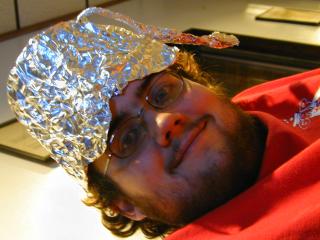
Tin foil hats

Wow, from under there, it feels like you could tick Chestnut Bunting.

Wednesday, November 29, 2006

Big dame hunters

Let's face it. If there were any birds about, there'd be no need to feature this

Or this

Monday, November 27, 2006

This will stop...

When McKinney and now Menzie stop too. Until then try this... the true story of my attempts to build a West Lothian list in blue-collar orange-marching hard-drinking Winchburgh. It was love at bomb site!

Sunday, November 26, 2006

Warning, may stray off topic

This blog post has been edited by Diamond White technology

Diamond White - directly responsible for my reproductive output x2 and many embarrassing experiences

Nighttime turns to morning, it's a cold but sunny day, and I resolve to STOP slipping old Quireboys lyrics into my text. If it started raining I could maybe slip some GnR lyrics in. But it didn't. With hopeless optimism, I put a new battery in the RememBird and headed out birdspotting. Have decided I need a PSP so I don't have to stop playing Star Wars just for the sake of going out. Did a big figure-of eight walk, down the track to the beach, up the cliffs, seawatch, back through Newtonhill to the Retreat, then down and up and round Cran Hill, back to the railway bridge and hame. Afraid it was dull again. Blue Tits and Robins. Not that I want to disparage Blue Tits and Robins. Jeez, if they were rare we wouldn't be able to stop talking about them. But as it happens (ladies and gentlemen) they're common as muck, especially in sunny Newtonhill. For the RSPB magazine, I saw a Chaffinch having a bath, and for Birdwatch magazine, I pished for a bit and brought a further 4 Chaffinches out of cover, and two Blue Tits and a Robin. 2 more Robins having a fight up the cliff sides, while a Dunnock and Wren watched. Offshore... 4 Common Gulls, 2 Great Black-backed Gulls feeding, + 2 Guillemots, and 2 Bottle-nosed Dolphins swimming about. Yada yada. I enjoyed the sensory-overload of 5 hybrid Hoodie x Carrion Crows feeding around the enormous dung heap on Cran Hill - when they spread *that* it spells DOOM for Newtonhill. Ach! Meadow Pipits, Skylarks, Magpies. Sorry I've got nothing to interest the casual reader. Mmmmm casual readers. You are welcome here.

My mind started to wander.... but that's OK - it came back. I've been watching the Dr Who spinoff, Torchwood, which on the whole is pretty dire, except for all the girl-on-alien sex etc. Last two episodes were interesting. One the other night they all went off to investigate aliens making people disappear in the Welsh Valleys. In the end it turned out there were no aliens involved - it was just Welsh farmers eating each other! I object! Being one third Welsh by residence (eh?) I thought it perpetuated stereotypes of rural communities being made up of suspiciously closely related, socially inept primitives. It was a cheap shot at the people we all know are the TRUE GUARDIANS OF THE COUNTRYSIDE! The other episode, I only saw 5 minutes in the middle and 1o at the end, but I think I picked up on the nuances of the plot. Housing estate built on ancient woodland site... fairies in the wood (who are really aliens, obviously) get cross and start killing people and taking children away. Actually, I think that might be true. Suburbia - where they cut down the trees and name the streets after them. That used to happen all the time where we used to live in West Lothian. You used to drive past bits of habbo month after month, and then one day it would be gone and there'd be one of those yellow signs advertising new developments called things like 'DeerPark', 'Birchwood Estate', 'Red Moss' etc. The worst one I remember was called 'Waterside Meadows'. I bet all the middle-management money-men commuters wonder why they can't get house insurance and their gardens go all squelchy in winter. Am I digressing? Maybe there's a hidden message here. Maybe it's not very hidden. Diamond White is driving my life tonight. And it's drunk!
Not sure what happened in Newtonhill. We live on a relatively modern estate... but the streets are all C-list celebrity saints... St Michael's, St Ternan's, St Peter's (guess he's an A-list), St Ann's. They must have dissolved a monastery, slaughtered the good people, and built houses on top. Btw did you know the best way to preserve Scotland's wildlife is to plant trees all over the top of it? It must be true cos I saw it in a leaflet.

Anyway, inspired by The McKinney, I thought I could post my top five songs of the week too. First one... the one most likely to make you go wtf? is by a band called Love/Hate, and is in fact one of the top five of my life. In fact I think everything self destructive I've ever done has been a direct result of this band. I even had a Budweiser-can crucifix of my own. Diane made me hang it from the rafters in our garage in Winchburgh, and I left it there when we moved out. Nice surprise for the person moving in. I saw this band once, at the Buckley Tivoli (oh yes!). Went on the bus. How they were not HUGE I will never know.


And the rest.... I won't embed these for the benefit of people who have lost interest by now... but check out:

Smashing Pumpkins - Today. The best song ever, with the best video ever. I wish our ice-cream man had the same Mad Max feel.

Alice in Chains - Nutshell. My physical desire for all members of Alice in Chains, even the dead one, needs no further comment.

Cure - Friday I'm in Love. I KNOW that if you like The Cure you're meant to say that the early stuff is best, and that Killing an Arab is your favourite song, and later they sold out, etc etc. But sorry. I 've GOT the Killing an Arab album and it is largely sh*t. This song is genius... I don't care if Monday's blue, Tuesday grey and Wednesday too. Thursday I don't care about you, it's Friday I'm in love!

Abrasive Wheels - Burn 'em Down. Leeds punk band, early 80s, still going but now fat. Even at this stage (82 video) they had lst the urgency... a couple of the band members used to hang around our house. It's where I first learnt the seductive smell of glue. Genius song. Caused troubled when some kids really did burn down their school.

Confession. I aren't really drinking Diamond White tonight. It's too classy and expensive. I'm on ASDA White Lightning. I'll regret it in the morning. Still, nothing lasts forever, and we both know hearts can change. And I'll just end up walking in the cold November Rain. ha ha! Got it!


Sunday, November 19, 2006

Swine and pigs and hogs

I was at the Young Farmers' Annual Ball and Piss-up on Friday night, and there I met a rosy-cheeked big-bosomed farmer, predictably called Molly, who invited me over to her place Sunday morning to see her pigs. I was rather taken, to be honest, so naturally I scooted round there at 5 am (fashionably late) today. To my disappointment it turned out she really did want me to see her pigs. Or more accurately, find them. They were out in the woods - had been since the acorns fell - and now she wanted them back. So I called up my swineherd, Matty. He really didn't want to come because apparently his wife was giving birth or something, but I threatened him with the sack and homelessness (nothing like the Scottish feudal system with its tied houses for keeping the working classes in line) and he was round in 20 minutes. We had a bit of a natter about the best way to make applejack, then got to work. Didn't get home til after noon. I was hoping for better luck at the Young Conservatives wine-tasting tonight (just got in) but to be honest it was the same crowd, each with a bigger set of false teeth. And Molly? Well 'she' turned out to be a man. I guess the beard should have been a clue, but love IS blind. Or maybe it's just me. That would in fact explain why I saw so few birds today. Actually I haven't seen many birds at all this week. The reason is we bought a Playstation... and it's fantastic. Have been playing Star Wars Lego all week. In fact this is me...

... I can't believe that I've wasted my life reading books, watching telly, going birding etc., when really I should have been defeating the evil empire of whatever. This is my problem really. I haven't actually seen the films. Not the new three anyway, so I'm not sure who I'm meant to be saving and who I should be slaying. But things seem to work out OK.

I was out today though, round Newtonhill against the odds. Hard work. I had to fight for every Blue Tit. There was a bit of movement going on, with some Skylarks and Meadow Pipits going over, and a Eurasian Siskin. There's a flock of Rock Pipits building up in the fields in from the beach - 12 today - built up to over 50 last winter. An Atlantic Puffin offshore was a bit unusual for winter, also 2 Northern Gannets going north. A Great Black-backed Gull turned up and the Puffin scarpered. Stood on the clifftops in an eastely breeze coming straight from Denmark, it occurred to me that it was unnecessarily chilly. In fact it was bloody freezing. I was really regretting my choice of vest, shorts and sandals for today's excursion. Trouble is Diane has washed my army coat and it doesn't feel like home any more. It smells pleasantly of washing powder.

So, I'm off to kill some Lego dude with a red and black stripy face. TTFN and remember kids...

Take heed, take care and TAKE BACK THE BIRDS!

Monday, November 13, 2006

Country Diary

Sunday Morning.

There was a westerly gale overnight, but the morning was pretty calm and in fact quite a nice day. So nothing for it, but to spoil my fun with a walk round newtonhill looking for birds. Face it Martin, the autumn is OVER - no Blackcaps, no Chiffchaffs, not even a Goldcrest today!
As I was throwing stones into the bushes at the Mill, hoping to flush all those Dusky Warblers, there was a Peregrine attacking a flock of 15 pigeons over Cran Hill. Really serious getting-my-breakfast-type going-for, very fast, on flickery half-folded wings. The pigeons were scattering round and round in confusion, and for a couple of minutes the Peregrine would pile through them, miss, come out the other side, turn round and smash through them again. Very exciting, except it didn't get any closer to a kill than knocking a couple of wing feathers out of one bird. When the pigeons split up and went in separate directions, the Peregrine gave up and relaxed its wings, flew over my head into Newtonhill. See... that's how few migrants there are now; I'm forced to write about this sort of stuff. My blog has become a country diary / natural gleanings. Next stop... The Guardian. And after that, the ignominy of Birdwatching magazine. While this was happening, a Common Buzzard flew through, going west (more hookbill vermin!), and I heard the calls of the wild wild geese, returning from their Arctic breeding grounds as they have done for so many millenia (I'm good at this!).

After this, I met up with my cousin, Lord Bufton of Tufton, for whisky and eggs, and we went out stalking deers. There was a Roe Deer on the opposite (south) side of the Elsick Burn, bouncing through the bracken. I quickly changed out of my hunting pink back into my stinking army coat, and sat down to watch it as it approached within 5 m without seeing me. It jumped into the burn and started heading downstream. With my high powered Communist resistance rifle, I could have shot it, but pity, I say pity, stayed my hand. I admired its beauty as it headed away to eat the roses in someone's garden. They are beautiful animals, but VERMIN, of course, and they all have to die. As Lord B says, they eat your crops and destroy your land. And he should know, because unlike you townies, us cuntry folk understand the ways of the errr.... countryside.

A White-throated Dipper (vermin - they drink your streams and crap on your washing) was on the rocks just up from the shore, and 12 Common Eider just out (parasites - they come to our country and spread disease). I tried a seawatch, but there was nothing happening. I think I was the only active birder in the country on Sunday who didn't see a Pacific alcid of some sort. What about that eh? Do you think it's not a coincidence that the Murrelet came in with Little Auks, and that it had come over the top? Anyway, I didn't see any murrelets, nor their considerably rarer cousin, the Little Auk (vermin - eat your plankton and laugh at your pint). There were a few Guillemots and Razorbills going back and forth, a Red-throated Diver south and a Long-tailed Duck north.

Cran Hill blah blah blah... Eurasian Curlews, Northern Rufous-backed Linnet-finches, Sky Larks, hybrid Hooded x Carrion Crows. Brown Hare. Myself and Buffie, we killed and ate them all, and drank heartily. I saw some dolphins close inshore, and ran pell mell across the stubble field to the clifftops for a better view, sending 20+ Rock Pipits scattering all directions (vermin). They didn't mind, they thought it was sweet. At least that's what they kept saying. The dolphins were two Bottle-nosed, going north close in. I got them both with a right and a left (you townies might think this is cruel, but remember they're WILD ANIMALS and they ENJOY the thrill of the hunt. And they eat all the fish. AND don't even get me started on Grey Seals, of which two offshore also).

When I got home I told Diane about the mammals I'd seen, and Lizzie asked me what a mammal was. So I said they were furry animals like hares and cats and errr... dolphins. But dolphins aren't furry, she pointed out. And Diane threw Kangaroos into the conversation for me. NEVER, repeat NEVER start an explanation you can't finish. I guess that's my top tip for the day. Ker-CHOW!

Sunday, November 12, 2006

"If any question why we died / Tell them, because our fathers lied"

So, on 22 October 1914, Lieut. Francis Monkton (24), posted to St Nazaire at the mouth of the Loire, wrote a letter to Harry Witherby about the migration of birds through the area. The letter was subequently published in British Birds.

Two weeks after writing this, Monckton was killed in action, and became the first obituary in BB resulting from that stupid series of family tiffs between inbred Royal donkeys that was the Great War.
The writer has lost in Monckton a valued and sincere friend and correspondent, and the study of Staffordshire Ornithology will suffer much by his having given his life so nobly for his country. (BB 8, 287)

Lewis N. G. Ramsay, 1890 - 1915.
Ornithologists have cause to mourn the loss of one most enthusiastic fellow worker who, though only 25 years old, had already much good work to his name... From an early age Mr Ramsay had been a keen student of birds and had amassed a great amount of data regarding the ornis of Aberdeenshire.

Lord Bradbourne, 1885-1915
..was killed at Neuve Chapelle on March 12th 1915. Lord Bradbourne had for some years been engaged in the study of South American birds, and at the time war broke out he was making collections of birds in Peru, whence he hurried home to rejoin his regiment.

Captain the Hon. Gerald Legge 1882-1915.
... was mortally wounded at Sulva Bay on September 9th 1915. All his life he was a keen naturalist, taking a special interest in wildfowl... As an instance of his keenness in studying ducks I may relate that one day when I met him at Patshullm he has just arrived from Northumberland, whence he had brought a nest of teal just hatching out. By telegraphing forward to several stations en route he had secured a relay of hot water bottles by means of which he had succeeded in keeping the ducklings warm.... He was last seen mortally wounded on the ground, and cheering on the men of whom he was so proud.

Major C. H. T. Whitehead 1881-1915
... was killed in action in France on September 25th or 26th, 1915. He was thirty-four years old... He discovered the new thrush, which I had the pleasure of naming Oreocincla whiteheadi after him, and amongst other interesting discoveries he made were the breeding haunts in the Himalayas of the Chinese Reed-Warbler.

Richard Bowen Woosnam 1880-1915.
..was killed while gallantly leading his men in an attack on the Turkish trenches in Gallipoli in June 4th,, 1915. Woosnam was an experienced traveller and field naturalist... All the collections he made are in the British Museum, and accounts of the birds with his field-notes have appeared in various volumes of the Ibis and the the Transactions of the Zoological Society.

Charles Stonham, 1859-1916
The ranks of British Ornithologists have been further thinned by the death of Charles Stonham... the brigade was duly mobilised at the outbreak of the present war, and in April 1915 Stonham proceeded to Egypt... and contracted the illness from the effects of which he came home to die... As a man, Stonham was a striking personality, tall of figure, lean and saturnine of appearance, of a fearless and outspoken honesty, and the possessor of a biting tongue: he hesitated not to speak of men and things as he found them: of enemies therefore he did not lack, nor did he of very many friends, and those of us who were privileged to know him well, knew him for a man of the kindliest nature, true as steel, and with a heart of pure gold.

Lieut. Col. H H Harington, 1868-1916
...who was killed in Mesopotamia on March 8th 1916. Colonel Harington was the discovery of a number of new forms, and several birds have been named after him in recognition of good work he did. He also contributed from time to time to the Ibis, the Journal of the Bombay Natural History Society and other periodicals.


Major F W Proctor, 1862 - 1916
...Almost to the last he retained his keen interest in oology and bird-life, and nothing gave him greater pleasure than the receipt of a letter full of bird news or a talk with a brother ornithologist.

Capt JM Charlton, 1881-1916 and Lieut HV Charlton, 1884-1916.
John Charlton was killed in the great attack near La Boiselle on July 1st 1916. He fell, shot through the head by a bullet, while leading his company....his last words being to his orderly: 'Is that you, B----? For God's sake, push on, I'm done.'...He supplied British Birds with a number of interesting notes and wrote many short articles in other journals and local papers. He was a most skilful and accurate taxidermist.
Hugh Charlton fell in action near Whychaate on June 24th 1916, struck by a bomb from a trench mortar... He also was a clever ornithologist and the brothers worked much together.... Birds were his speciality; his work was very artistic in nature.... One of his pictures, 'Home of the Dipper' was exhibited in the Royal Academy in 1912.

Capt. Cecil Stanley Meares, 1883 - 1916
... was killed while leading his company into action on July 30th 1916... He made, together with his brother DH Meares, an excellent scientific collection of British birds' eggs, which contained perfect clutches of eggs, of nearly every British breeding bird, supplemented by profuse and accurate data of their localities, notes and habits.... In his spare moments, even within sound of the guns, he would take walks and rides through the country to observe the bird life.

Captain Lord Lucas 1976-1916.
It was reported the Lord Lucas was missing after making a flight over German lines on November 4th, 1916... He was an ardent lover of Nature, and especially of birds, and was elected a member of the BOU in 1902. It may be mentioned that he took a considerable interest in our Marking Scheme, and only the other day we heard of an interesting record of the recovery of a Lapwing ringed by him some four years ago.

Frederick Courtney Selous 1842-1917
On one occasion, when grouse driving, Selous saw two Peregrine Falcons pass over, very high, mere specks in the air. None of the other six guns had noticed them; our gaze was presumably limited to the level of game flight. Selous scanned the whole arc of heaven... His very death - 'killed in action' at 65 - epitomizes his whole career.

Capt. John D. Grafton-Wignall, 1888-1917

... January 1916 saw him in Mesopotamia where, to the bitter regret of all who knew him, he was killed in action just over a year later... he had that perfect sight that enabled him to 'pick up' a sitting Woodcock or a clutch of shingle-laid eggs as quickly as (and he was quick) he could detect - and accurately name too - flying or at rest some bird a great way off... To his many friends - and to me especially - his loss is irreparable: ornithology has lost a very accurate, first-rate and indefatigable observer.

Eric B Dunlop, 1887-1917
The war has claimed as a victim in the person of Mr Eric B Dunlop, who was killed in action on May 19th, 1917, at the age of 30 years, one of the most promising young ornithologists in the north of England... He made a special study of the roosting habits of the Corvidae showing that the whole of the British members of this group congregated for roosting at certain seasons. ....At the outbreak of the war he was engaged upon a study of the nesting habits and incubation of birds and was in northen Manitoba, Canada... He was in France barely a month before his death.

Christopher James Alexander 1887-1917.
He was seriously wounded near Passchendaele on October 4th 1917, and it seems almost certain he was killed, or died after being put on the ambulance...
...Several letters followed from France, ending with one on September 30th in which he wrote of a Quail they had put up , which, with Pied Flycatcher, Woodchat and Melodious Warbler seen passing a few days before, made 107 species for the year - a wonderful total under such conditions. 'The sun is sinking into the mists' he concluded: 'it really looks quite wintry, in spite of the heat'. And then they went up to the line again...
... His work seemed hardly to have begun. But such as it is, all his work is methodical, scientific, accurate, full of insight and judgement, and, above all, the true expression of a life devoted to the study of Nature.

CJ Alexander was one brother of Horace Alexander (see 'Heroes') and this was written by him.

All these come from obituaries published in
British Birds.

Tuesday, November 07, 2006

This
is total BS! I make the joke in the Secret Freezer Sunday. it appears in the Aberdeen Evening Express Monday!

Monday, November 06, 2006

Another Yellow-browed

I've spent a lot of my lunchtimes in Westburn Park over the autumn, sometimes with nockies, sometimes not. Today not, but I wish it had been with, cos as I was tucking into my prawn sarnies a Yellow-browed Warbler called a few times from the sycamores around and about me. it was keeping high up and although I saw it moving about I couldn't get any plumage. It seemed to drop down into the bushes by the Tennis Centre, but when I went over I couldn't pish it out again, so it may have headed off.

Sunday, November 05, 2006

Warning, terrible pun, just thought of, makes me giggle

Back out around Newtonhill this morning; I wanted a slice of this Little Auk action that's been happening midweek. This was my first chance to be out, so reckoned had missed the big push, but almost certainly some stragglers to catch up with. A chance for my new scope to do its stuff too. I've thought of a new advertising campaign for Zeiss - here it is. Do you think they'll go with it and I'll get rich?


Actually, the reason I went for this scope was that it was designed by Tolkien-obsessed nerds and does in fact glow blue when in the presence of Auks. Ideal for today's job.

Deadly dull heading down the track, with all the Blackcaps cleared out of their recent haunts. Couple of Rock Pipits on the beach, with a Common Eider offshore. Dull dull dull. I even contemplated making some notes about bird behaviour. THAT'S how dull. Two men burning one of the fishermen's huts was interesting. Hope it was theirs to burn.

So I get to my clifftop seawtching soot,and my scope is glowing blue - good sign - but it turns out to be 2 Razorbills and a few Guillemots on the water. They look good though, as I'm no longer looking through strata of dried-on rainwater. I can tell there's been Little Auks about, because 3 Great Black-backed Gulls are flying up and down offshore, looking really fat and well fed. Bit of a seawatch, and bingo, I get onto 12 Little Auks moving north in ones and twos. A dribble. As I told the nurse at the sperm bank, it's not much, but it's something. Actually I'm not sure how long it took to see that many/few. I think it was about an hour, sometime mid-morning. My watch stopped at 12.30 pm a week past Friday. You'd think it would be a pain, but quite the opposite - I've entered a fantastic alternative universe where no one can pin me to a deadline, because time has no meaning, except in so far as it's lunchtime ALL the time. It's a bit like being on BOURC!!! haha! That's a joke by the way. In truth, it's so *completely* unlike BOURC it would be insulting to the committee and my colleagues on it to even contemplate such a joke publically and perpetuate unjust and inaccurate stereotypes. I really wish I'd think before opening my mouth. Sorry sorry sorry.

back on track... also 4 Red-throated Divers south, and a Great Northern Diver (pretty good). 2 male Common Scoters north and 2 male Long-tailed Ducks, and a single juv Northern G
annet. As I was packing up to go home, a Shelduck flew north close inshore. Pretty uncommon here. And as I walked back through Newtonhill, I chivvied a Blackcap out of the sycamores in the cottage gardens. So there are some migrants still about.

Fantastic sunset this evening - photos in Lizzie's Pink Plastic Warehouse.